by Adel Awad, Hwaija Bassam, Isreb Talal
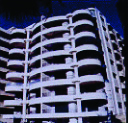
These buildings are characterized by a combination of shear walls and frames in both directions. The buildings are multiple housing units found in the main cities of Syria. The shear walls are often part of the elevator and service cores, whereas the frames are arranged in-plane, in conjunction with the walls, to support the floor system. Stiffness and mass distribution are irregular and the majority of buildings may experience soft-story or torsional problems. As a result, these buildings are expected to have only moderate seismic resistance.
Month: August 2011
by Marjana Lutman, Miha Tomazevic
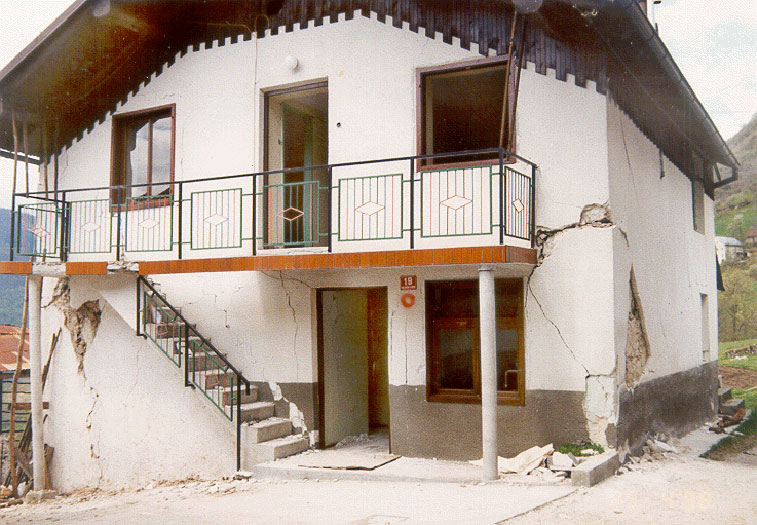
Rubble-stone masonry houses are still found throughout Slovenia. This housing type with its special history represents a typical, older residential building in the northwestern part of Slovenia. After their destruction during World War I, these houses were rebuilt, mostly with the recycled stone material from demolished buildings. Many houses of this type were subsequently damaged during the last two earthquakes in Slovenia (1976 Friuli and 1998 Bovec). In order to preserve the country’s architectural heritage, about 66% of these houses were strengthened following these earthquakes.
by Mark Klyachko, Andrey Benin, Janna Bogdanova
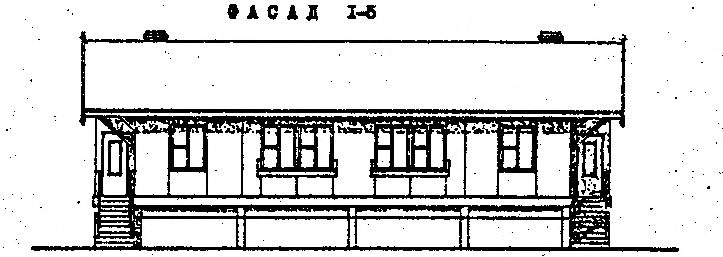
This is a rural housing construction practice widespread in the forested areas of Russia. Buildings of this type are common in seismically prone areas of Russia (Far East, Siberia, Baikal Lake Region). The load-bearing structure is made of wood panel walls. Buildings have timber roof and fieldstone or concrete strip foundations. Typical seria 181-115-77 cm of ‘Giprolesprom’ for seismic regions is an example of this building type. Seismic resistance is relatively high, provided that the quality of materials and the construction are satisfactory.
by Mark Klyachko, Andrey Benin, Janna Bogdanova
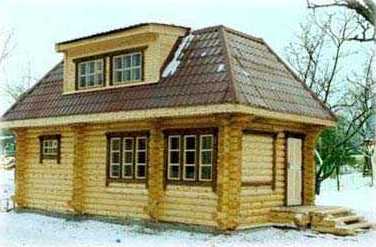
This is a rural housing construction practice widespread in the forests of Russia. Buildings of this type are common for seismically prone areas of Russia (Far East, Siberia, Baikal Lake Region, North Caucasus). The load-bearing structure is made of wood. To construct the walls, timber logs are sawn horizontally in a square or circular cross section with special end joints (similar to dovetail joints). Buildings have timber roofs and fieldstone or concrete strip foundations. Typical seria 146-115-77 cm of ‘Giprolesprom’ for seismic regions is an example of this building type. Seismic performance of these buildings is good if the construction quality is adequate.
by Mark Klyachko, Igor Mortchikchin, Igor Nudga
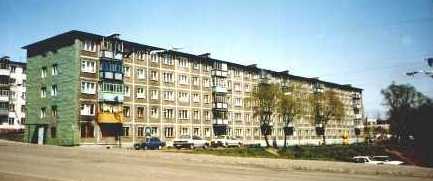
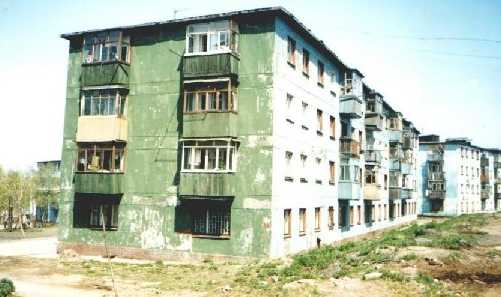
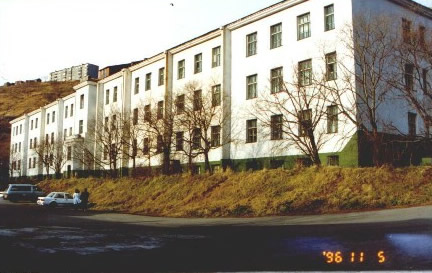
Large panel buildings represent one of the most common multifamily housing construction types (apartment buildings) in the former Soviet Union. Buildings of this type range from 4 to 9 stories high. This construction practice started in the 1960s and has been followed ever since. This contribution describes three different types (series) of large panel construction, known as seria 122, seria 135, and seria 1-464c. These three types (seria) are characterized by welded panel connections. The main vertical load-bearing elements, designed to carry both gravity and lateral loads, are precast reinforced concrete panels. Typically, buildings are of a regular plan and are characterized with only one interior load-bearing wall in the longitudinal direction and several walls in the transverse direction. Floor and roof structures are also made of precast reinforced concrete panels. Both wall and floor panels are of room dimensions, and the assembly of these structures consists of setting the panels in their final position and joining them in a box-type structure by means of welded joints. The methodology of achieving panel connections in large panel construction practice has significantly improved in the last 50 years. Seria 1-464c is among the first seria of large panel construction. Initially, panel joints in seria 1-464c were achieved by welding the steel elements projecting from the panels. Later on, welded joints were replaced with the monolithic joints. Seria 1-464c is characterized by a plan typical for large panel buildings with continuous walls and a typical span (2.7 m or 3.6 m) of cross walls (Figures 3C and 3D). Seria 122 is characterized by discontinuous façade walls in the longitudinal direction (Figure 3A). Seria 135 is characterized by a larger span of cross walls (6m) as compared to the other types (see figure 3B). Due to the large wall density, these buildings are rather rigid. Seismic resistance in this construction type is generally good, as these buildings have been exposed to several strong earthquakes in the former Soviet Union.
by Mark Klyachko, Yuriy Gordeev, Freda Kolosova
This is a typical residential construction found both in urban and rural areas. It represents a construction practice followed in the former Soviet Union. Buildings of this type constitute 15 to 30% of the housing stock in earthquake-prone areas of Russia (Far East, Siberia, Baikal Lake Region, North Caucasus) and CIS states (Central Asia, Armenia, Georgia, etc.). The main load bearing system for lateral and gravity loads consists of concrete block masonry walls and concrete floor slabs. Seismic resistance is relatively good, provided that the welded block wall connections are present and are well constructed.
by Mark Klyachko, Yuriy Gordeev, Freda Kolosova
This is a typical residential construction found both in urban and rural areas. It represents a construction practice followed in the former Soviet Union. Buildings of this type constitute 15 to 30% of the housing stock in seismically prone areas of Russia (Far East, Siberia, Baikal Lake Region, North Caucasus) and in CIS states (Central Asia, Armenia, Georgia, etc.). The main load-bearing system for lateral and gravity loads consists of concrete block masonry walls and concrete floor slabs. Seismic resistance is relatively good, provided that the welded block wall connections are present and well constructed.
by Cesar Loaiza F., Marcial Blondet, Gianfranco Ottazzi
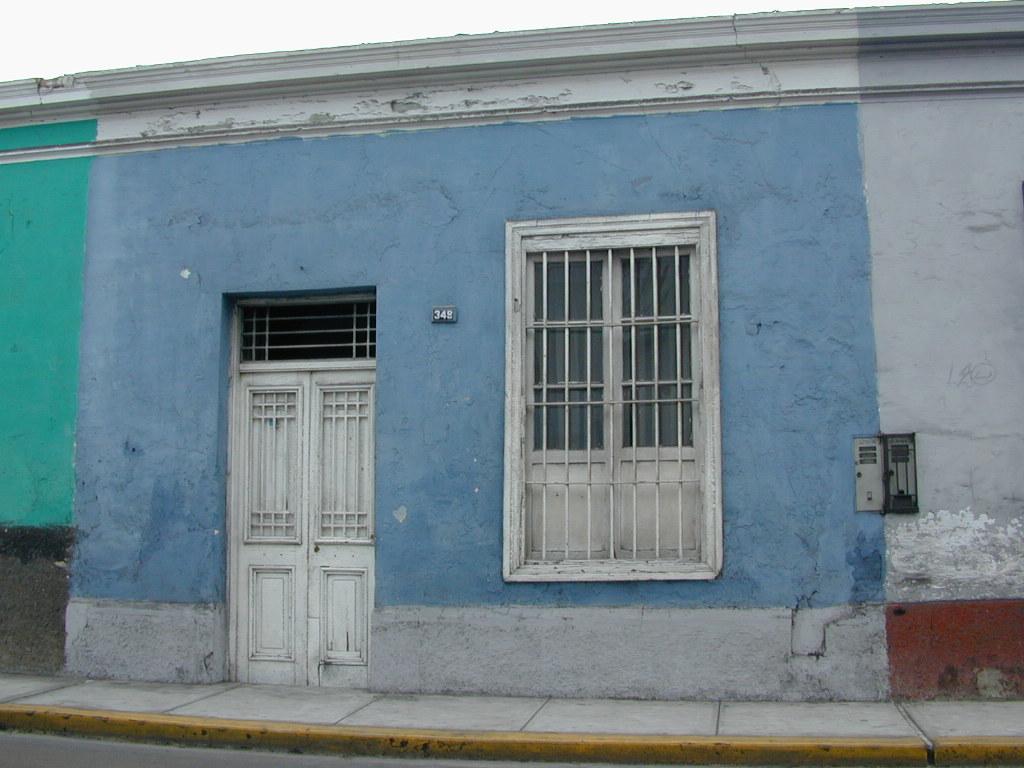
This is a traditional construction practice followed for over 200 years. Houses of this type can be found both in urban and rural areas in the coastal and highlands regions of Peru. Walls are made of adobe blocks laid in mud mortar. The roof structure is made of wood; it usually consists of timber beams with timber planks covered with a mud mortar overlay or with clay tiles or metal sheets. Houses of this type are mainly occupied by poor people. This construction is considered to be very vulnerable to earthquake effects.
by Cesar Loaiza F., Marcial Blondet
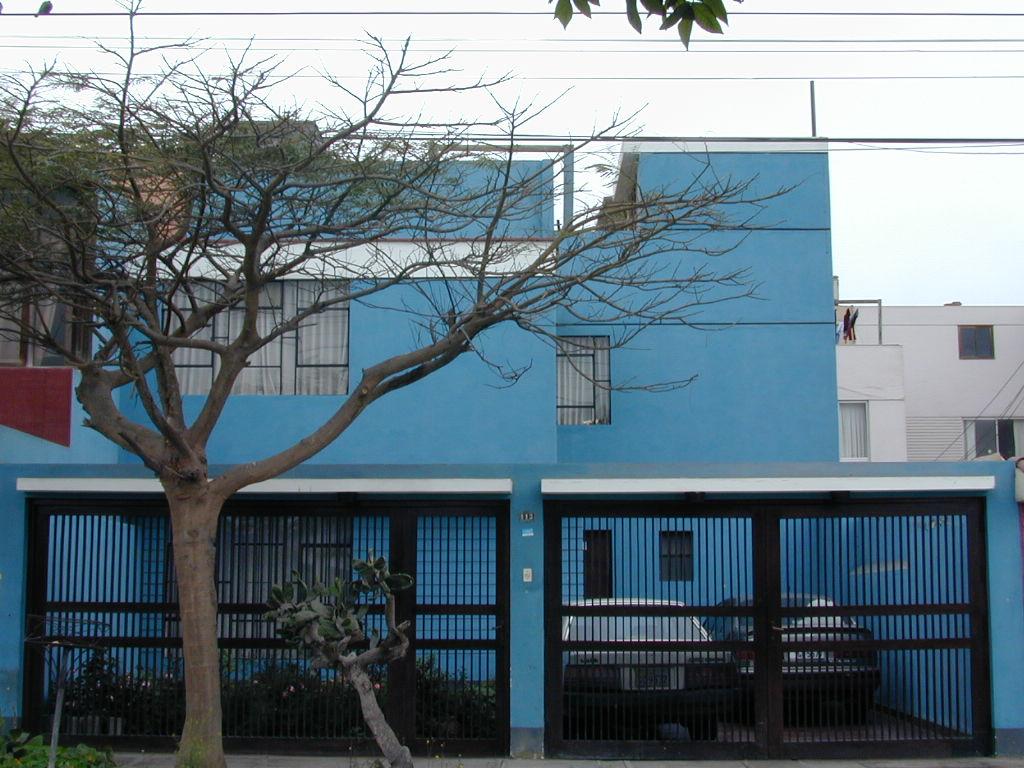
This is the most common single-family housing construction practice followed both in urban and rural areas of Peru in the last 45 years. Confined masonry buildings consist of load-bearing unreinforced masonry walls made of clay brick units, confined by cast-in-place reinforced concrete tie columns and beams. These buildings do not have a complete load path in both horizontal directions required for adequate lateral load resistance. However, in spite of that, typical houses may show a good seismic performance.
by Cesar Loaiza F., Marcial Blondet
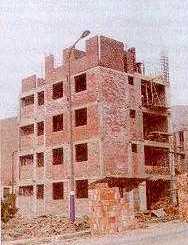
This multifamily housing construction type has been the most commonly used in the urban areas of Peru during the last 35 years. Confined masonry buildings consist of load-bearing unreinforced clay masonry walls confined by cast-in-place reinforced concrete tie columns and beams. Tie columns are cast after the construction of the masonry walls is complete and they are connected to the tie beams. Confined masonry walls have limited shear strength and ductility; however, buildings of this type typically have a good seismic resistance.