Report # 108 : Half-timbered house in the “border triangle” (Fachwerkhaus im Dreiländereck)

by Maria D. Bostenaru

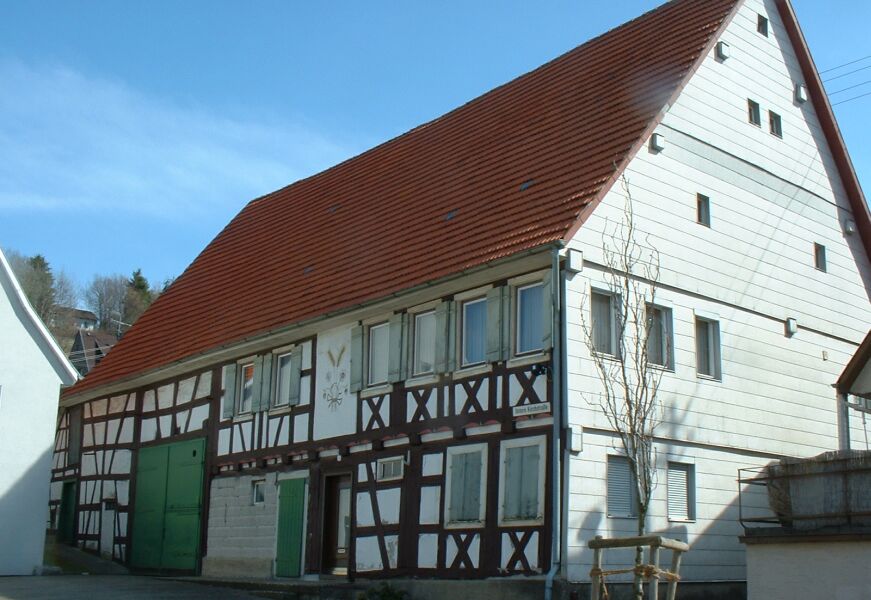
This type of construction can be found in both the urban and rural areas of Germany, Switzerland, northern France, and England. The main load-bearing structure is timber frame. Brick masonry, adobe, or wooden planks are used as infill materials depending on the region. This report deals with the two latter types, because they are located in areas where strong earthquakes occur every century. However, this construction has proven particularly safe, and some of the buildings have existed for 700 years. These buildings have characteristic windows and a rectangular floor plan, with rooms opening to a central hall, which were later replaced by a courtyard. Typically, each housing unit is occupied by a single family. While in the past this was the housing of the poor, today affluent families live in these historic buildings. The load-bearing structure consists of a timbered joists and posts forming a single system with adobe or wooden infill. The walls consist of a colonnade of pillars supported by a threshold on the lower side and stiffened by crossbars and struts in the middle. On the upper part they are connected by a “Rahmholz.” The roof is steep with the gable overlooking the street. The floors consist of timber joists parallel to the gable plane with inserted ripples. The only notable seismic deficiency is the design for gravity loads only, while numerous earthquake-resilient features – the presence of diagonal braces, the achievement of equilibrium, the excellent connections between the bearing elements, the similar elasticity of the materials used (wood and eventually adobe) and the satisfactory three-dimensional conformation – have completely prevented patterns of earthquake damage. Since 1970, buildings in Switzerland are regulated by earthquake codes (latest update 1989). The 2002 edition will incorporate EC8 recommendations.

HTML | PDF

Report # 150 : Timber-reinforced Stone Masonry (Koti Banal Architecture) of Uttarakhand and Himachal Pradesh, Northern India

by Piyoosh Rautela, Girish Chandra Joshi, Yogendra Singh, Dominik Lang

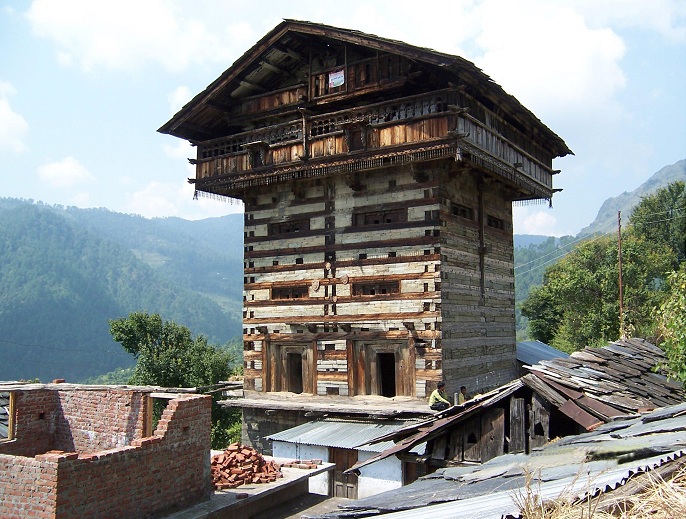
Despite being located in a high seismic risk area, a region in the Himalayan states of Uttarakhand and Himachal Pradesh (Northern India) exhibits an elaborate tradition of constructing multistoried houses. In the Rajgarhi area of Uttarkashi district (Uttarakhand) a large number of intact buildings of the distinct construction type known as Koti Banal can be found. Koti Banal is the name of a village in the Yamuna Valley which represents the traditional knowledge and understanding of earthquake effects on buildings and their earthquake resistant design. Investigations suggest that the region had evolved this elaborate and magnificent earthquake-safe construction style as early as 1,000 years before present. This architectural style further demonstrates the existence of elaborate construction procedures based on principles somewhat akin to that of blockhouse construction. Many features of these buildings are considered as the basics of modern earthquake-resistant design. Generally, ornate multistoried houses with abundant use of wooden beams are characteristic of Rajgarhi area. For buildings of the Koti Banal architecture, locally available building materials such as long thick wooden logs, stones and slates were judiciously used. The height of these structures varies between 7 and 12 m above the base platform which consists of dry stones. These structures are observed to have four (Chaukhat) to five (Panchapura) stories. It is reported that especially buildings of the Koti Banal architecture withstood and performed well during many past damaging earthquakes in the region. In a report on the effects of the 1905 Kangra earthquake (M 7.8), Middlemiss (1910) already describes the well performance of these ?(..) top-heavy constructions? located along steep slopes of the Kangra-Kulu epicentral area, which differed ?entirely from the sun-dried brick-built structures of the Kangra Valley. The performance of these structures has also been corroborated by eye-witness accounts during the 1991 Uttarkashi earthquake which had a magnitude of mb 6.6 in an epicentral distance of 30 km during which many new buildings collapsed while these structures did not suffer any damage. The reasons that these buildings outlived so many centuries mainly lie in their structural configuration which clearly demonstrate that their builders already had the idea of dynamic earthquake actions, particularly out-of-plane failure of masonry walls. The buildings are further characterized by a number of advantageous design features such as regular plan shapes, the sensible use of locally available building materials, the integration of wooden beams over the total height of the building as well as small openings and the arrangement of shear walls.

HTML | PDF

Report # 148 : Vivienda de Minifalda (Wooden houses with heavy bases)

by Dominik Lang, Alvaro Amador, Lisa Holliday, Claudio Romero L, Armando Ugarte

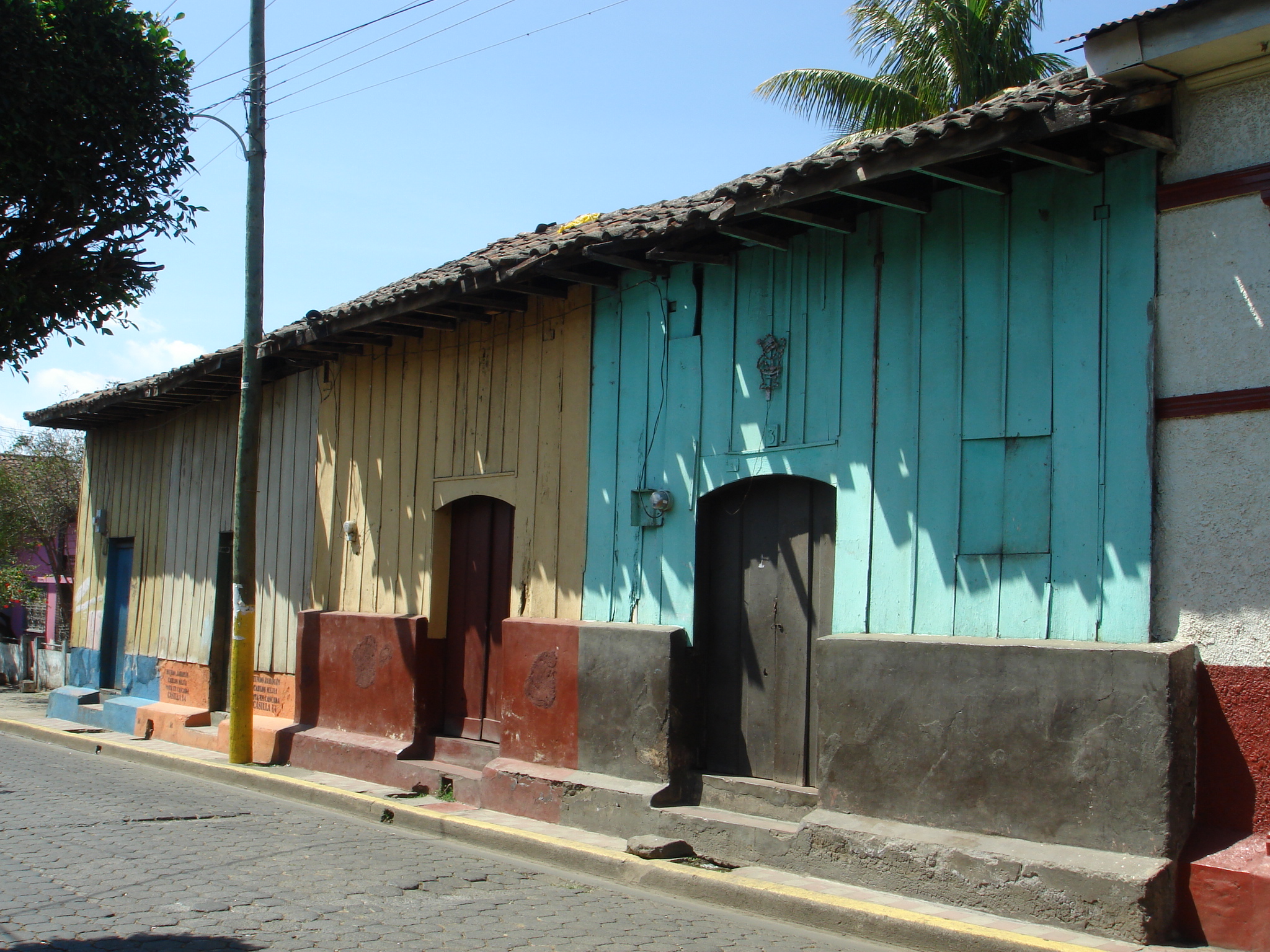
The term ‘minifalda’, translated ‘miniskirt’ refers to the building’s walls which consist of masonry or concrete in the lower part, while the upper part is made of a light wood construction (also ‘madera y concreto’). According to a recent population census carried out in 2005 (INEC, 2006), the total percentage of minifalda houses in Nicaragua was around 7% (8% in urban and 5.6% in rural areas). In the year 1998, minifalda represented 9.8% of the total houses in Nicaragua (12.8% in urban and 6.1% in rural areas; according to OPAS, 2001). Comparing the two numbers, it shows that the rate of this construction type on the total building stock in Nicaragua has reduced considerably. The combination of a more stable and consolidated base made of concrete or masonry and a light and flexible upper part of the walls made of wood frame construction, provides these houses with some advantages. However, the heavy roofs, which consist mostly of tiles, increase the vulnerability of the buildings especially during earthquake action.

HTML | PDF

Report # 147 : Traditional Naga Type House

by Amir Ali Khan

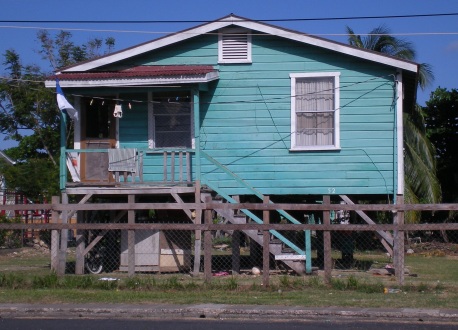
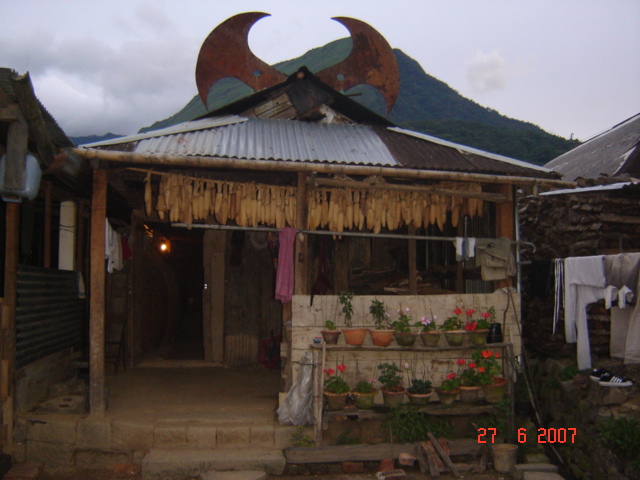
The housing type is most common throughout the Northeast India which lies in the most severe seismic zone of the country (Zone V – corresponding to MSK IX). Majority of this type of houses are used for residential purposes. Typically these houses are built with light weight locally available material like bamboo, wooden planks, thatch etc. These housing types have traditional system of bamboo/wooden posts. Bamboo posts are inserted into the ground to act as compression members and are tied with horizontal bamboo/wooden girders with the help of bamboo ropes (cane) to give a proper shape and framing action. However, there is no protection of bamboo/wooden posts against decaying/termites or any other natural cause. The performance of these houses during the past earthquakes is unknown. However, during the discussions with local people about the performance of these houses in the past major earthquakes, it was noted that the majority of houses survived.

HTML | PDF

Report # 141 : Vivienda de Bahareque

by Dominik Lang, Roberto Merlos, Lisa Holliday, Manuel A. Lopez M.

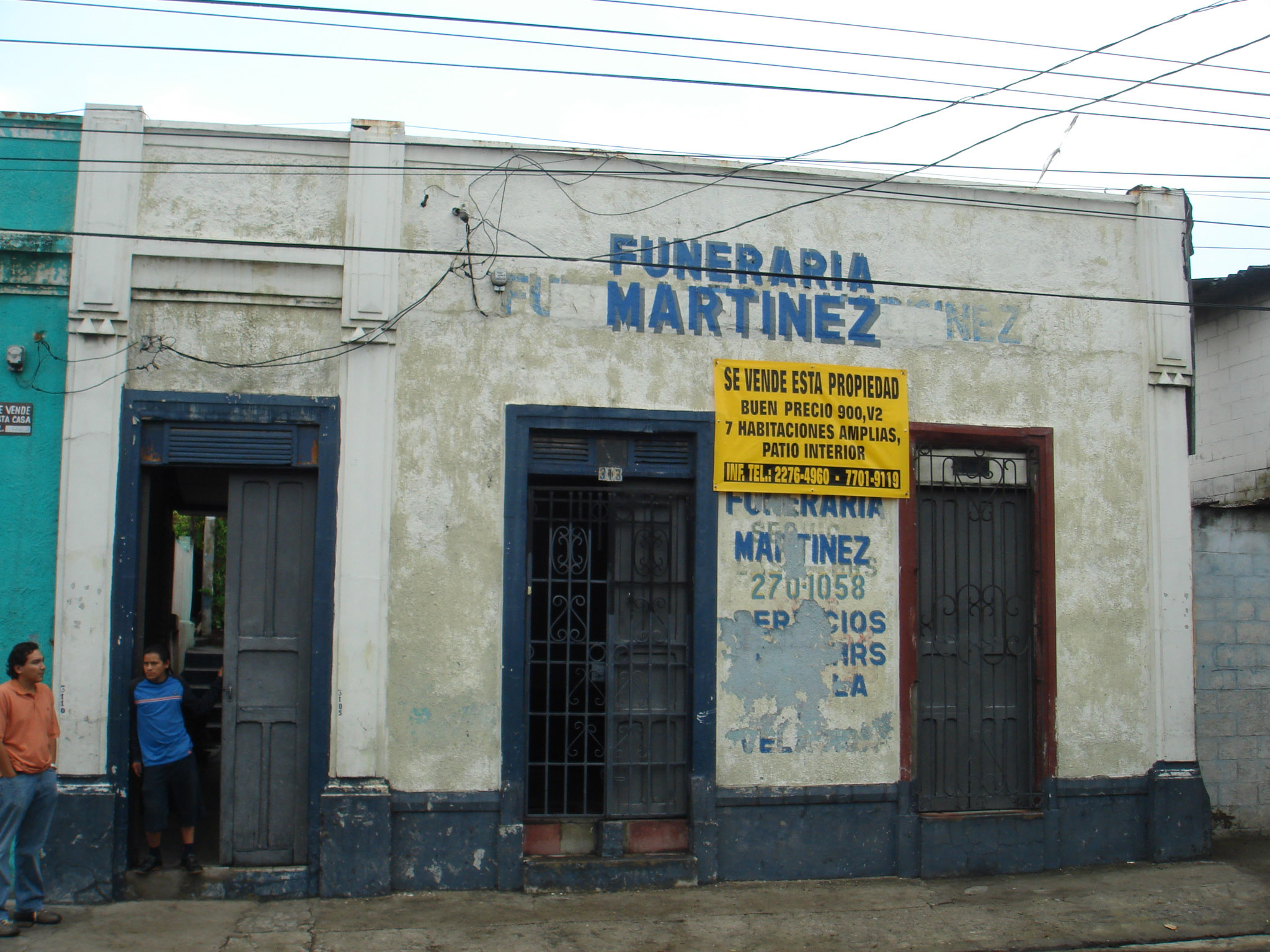
The bahareque construction type refers to a mixed timber, bamboo and mud wall construction technique which was the most frequently used method for simple houses in El Salvador before the 1965 earthquake (Levin, 1940; Yoshimura and Kuroki, 2001). According to statistics of the Vice-ministry of Housing and Urban Development in the year 1971 bahareque buildings had a share of 33.1 % of all buildings in El Salvador, while in 1994 the percentage of bahareque declined to about 11 % (JSCE, 2001b) and in 2004 to about 5 % (9 % in rural areas; according to Dowling, 2004). The term ‘bahareque’ (also ‘bajareque’) has no precise equivalent in English, however in some Latin American countries this construction type is known as ‘quincha’ (engl.: wattle and daub). In order to prevent confusion it should be noted, that in El Salvador the term ‘bahareque’ is used for all types of this mixed construction type regardless the material of the horizontal elements (struts).

Bahareque buildings are characterized by high flexibility and elasticity when carefully constructed and well-maintained, and thus originally display good performance against dynamic earthquake loads. However, bahareque buildings in most cases show high vulnerability during earthquakes. This is caused by poor workmanship (carelessness and cost-cutting measures during construction), lack of maintenance (resulting in a rapid deterioration of building materials), and structural deficiencies such as a heavy roofing made out of tiles. Bahareque structures are primarily of residential use and only one story. The structural walls are mostly composed of vertical timber elements and horizontal struts which are either made of timber slats, cane/reed (carrizo), bamboo (vara de castilla, caña brava or caña de bambú) or tree limb (ramas). These members are generally 2- to 3-inches thick and are fastened at regularly spaced intervals from the base to ceiling height at the vertical elements (with nails, wires or vegetal fibers). This creates basketwork type skeleton which is then packed with mud and clay filler combined with chopped straws (or sometimes with whole canes), and covered with a plaster finish in some cases. In rural areas, the walls are often left plane, without any lime plaster and whitewash, or paint, which gives them a wavy surface with an unfinished character. It should be noted that bahareque houses in rural areas are quite different from those in urban areas both in terms of their esthetical appearance as well as their structural capacity (cf. Figures 1 and 2).

HTML | PDF 

Report # 108 : Half-timbered house in the “border triangle” (Fachwerkhaus im Dreiländereck)

by Maria D. Bostenaru

This type of construction can be found in both the urban and rural areas of Germany, Switzerland, northern France, and England. The main load-bearing structure is timber frame. Brick masonry, adobe, or wooden planks are used as infill materials depending on the region. This report deals with the two latter types, because they are located in areas where strong earthquakes occur every century. However, this construction has proven particularly safe, and some of the buildings have existed for 700 years. These buildings have characteristic windows and a rectangular floor plan, with rooms opening to a central hall, which were later replaced by a courtyard. Typically, each housing unit is occupied by a single family. While in the past this was the housing of the poor, today affluent families live in these historic buildings. The load-bearing structure consists of a timbered joists and posts forming a single system with adobe or wooden infill. The walls consist of a colonnade of pillars supported by a threshold on the lower side and stiffened by crossbars and struts in the middle. On the upper part they are connected by a “Rahmholz.” The roof is steep with the gable overlooking the street. The floors consist of timber joists parallel to the gable plane with inserted ripples. The only notable seismic deficiency is the design for gravity loads only, while numerous earthquake-resilient features – the presence of diagonal braces, the achievement of equilibrium, the excellent connections between the bearing elements, the similar elasticity of the materials used (wood and eventually adobe) and the satisfactory three-dimensional conformation – have completely prevented patterns of earthquake damage. Since 1970, buildings in Switzerland are regulated by earthquake codes (latest update 1989). The 2002 edition will incorporate EC8 recommendations.

HTML | PDF

Report # 92 : Historic, braced frame timber buildings with masonry infill (‘Pombalino’ buildings)

by Rafaela Cardoso, Mario Lopes, Rita Bento, Dina D’Ayala

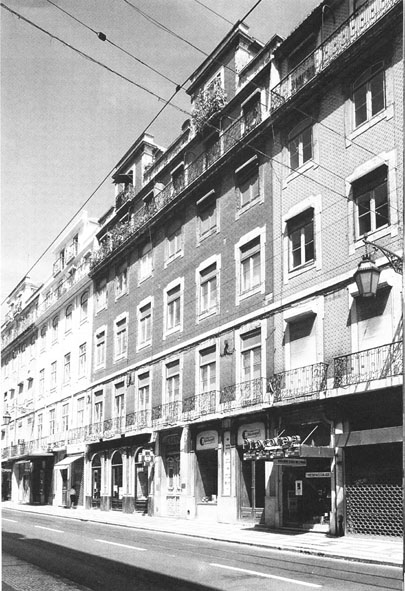
Pombalino buildings (see Figures 1, 2, 3 and 4) are historic masonry buildings that can be identified by the presence of a three-dimensional timber structure (named “gaiola pombalina”), which is enclosed in internal masonry walls above the first floor. The roofs are built with timber trusses clad with ceramic tiles and the floors are made of timber boards laid on timber joists. Ground floor walls are roughly dressed stone masonry supporting a system of vaults made of clay tiles, with stone arches. Foundations are made of short and small-diameter timber piles connected by a timber grid. These buildings were built after the 1755 earthquake when fear of new earthquakes led to the enforcement of anti-seismic provisions, such as establishing a maximum number of stories and introducing an interior timber structure called “gaiola.” The buildings originally were mixed-use with commercial enterprises on the ground floor and residences on the upper floors. During the 20th century, most Pombalino buildings underwent substantial refurbishment when they were converted and occupied entirely by banks and companies. For the buildings that have maintained their original uses, the main problems result from poor maintenance.The expected collapse mechanisms due to earthquake actions are the overturning of facades (out-of-plane) or shear failure at the plane of the walls at ground floor level (global shear mechanism), leading to a global collapse mechanism. Typical seismic strengthening of these buildings includes the introduction of a concrete/steel ring beam at the level of the roof eaves. The introduction of steel elements/pre-stressed cables or of anchors connecting parallel masonry walls is also common. Steel elements are also used to connect detached timber elements from the floors and gaiola to the masonry. New techniques applying new materials like Fibre Reinforced Polymers (FRP) are also used to increase the strength of the connections of timber elements that compose the gaiola.

HTML | PDF

Report # 86 : Single-family wooden house

by Norio Maki, Satoshi Tanaka

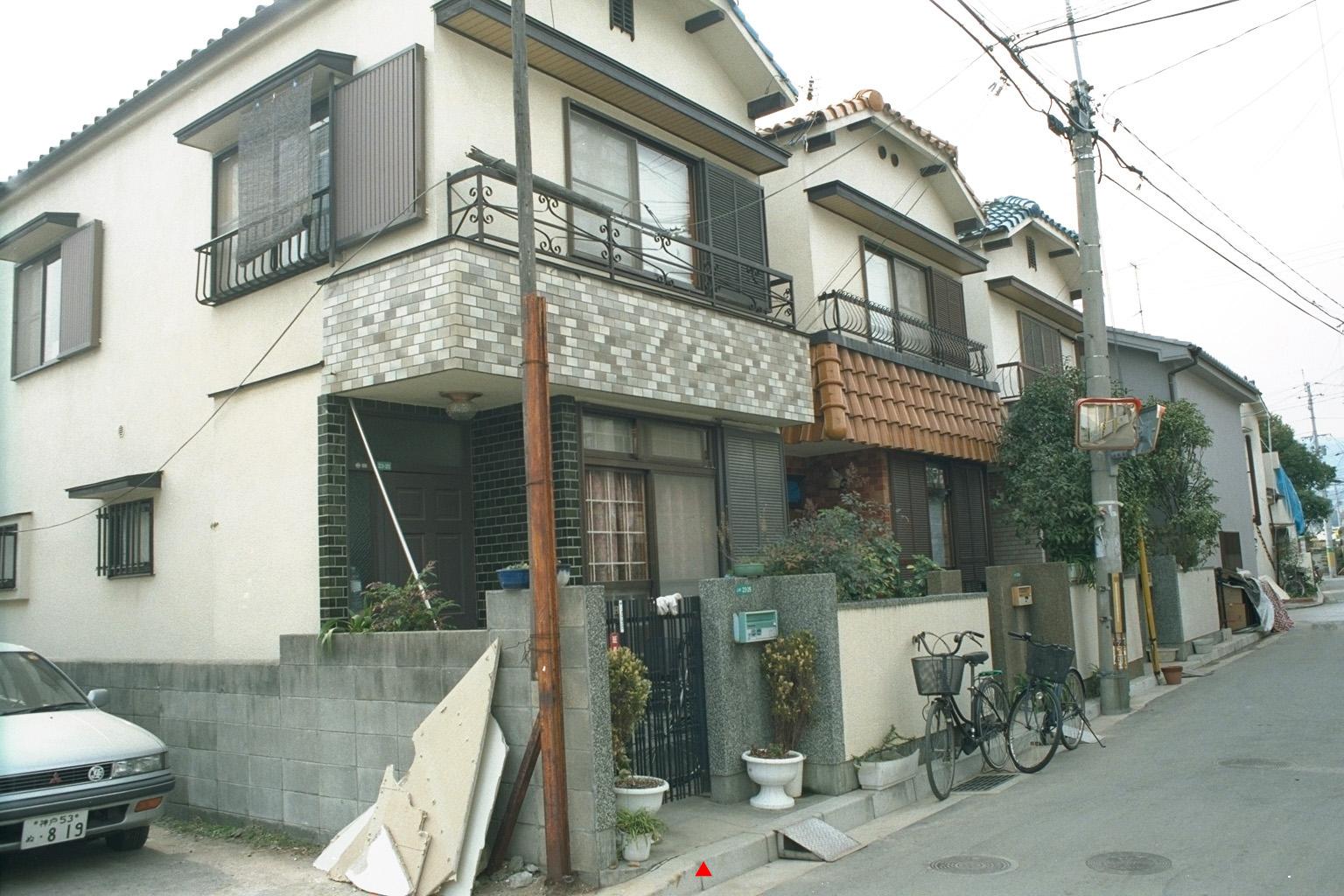
Japan has a long tradition related to wood construction. The main building of the Horyuji-temple, which was constructed in the late 7th century, is the oldest existing wooden structure in the world. Most Japanese housing is of wood construction. In 1993, 68.1% of the 45.8 million units of housing stock consisted of wooden structures. However, in newly constructed housing, the percentage of wooden structures is decreasing. In 1995, the percentage of wooden structures in newly constructed housing was 45.5%. The Hanshin Awaji earthquake disaster in 1995 damaged many wooden structures, especially housing that was constructed according to the pre-1980 building code. Despite the severe damage at the time of the Hanshin earthquake and governmental encouragement of seismic upgrading, retrofitting of these houses is not common.

HTML | PDF

Report # 82 : Single-family wood frame house

by Carlos E. Ventura, Mehdi H. K. Kharrazi

Single-family wood frame construction represents the most common housing construction practice found throughout Canada and constitutes over 50% of the housing stock in British Columbia. A typical Canadian-style modern wood frame house consists of a concrete foundation, upon which a platform is constructed of joists covered with plywood or oriented-strand board (OSB) to form the ground-floor level of the house. This platform is connected directly to the foundation with anchor bolts, or alternatively, supported by a short wall, a so-called “cripple wall,” “pony wall,” or “stub wall,” which should be connected to the foundation with anchor bolts. On this base, the exterior and interior walls are erected, which consist of a horizontal sill plate with vertical timber studs with board or panel sheathing nailed to the studs on the outside of the building. The roof structure typically consists of prefabricated trusses, which are covered with sheathing and roof tiles (Rainer and Karacabeyli 2000). Because this is generally considered to be a non-engineered construction, the Canadian National Building Code does not usually require direct professional architectural or engineering involvement. Specific seismic construction requirements and calculation/design requirements for seismic resistance are currently not included in Part 9 of the Code, which addresses low-rise residential wood frame construction. There is no evidence of substantial damage to this type of construction in past earthquakes in Canada, which have occurred away from densely populated urban centers. However, recent experimental research studies (Earthquake 99 Project at the University of British Columbia), focused on seismic performance of wood frame construction, have revealed vulnerability in this type of construction to seismic effects, depending on the age and wood construction technology.

HTML | PDF

Report # 65 : Wood frame single family house

by Christopher Arnold

Wood frame construction is typical for single family houses throughout the USA. Historically, in the East, Midwestern and South, brick masonry and stone were used for house construction, but this began to be superseded by wood frame around the turn of the 19th century. In the earthquake-prone western part of the US, wood frame has been dominant over stone and brick. The development of present-day wood frame construction began with the appearance of standardized sawn lumber and cheap machine-made nails. By 1840, the typical wood frame house was built of milled lumber in standard sizes. The standardized wood frame structure is now augmented by a wide range of compatible standardized components such as doors, windows, electrical and plumbing fixtures, and the like, that are designed to be easily installed in the wood structure. Because wood frame walls are hollow, alternative levels of insulation can be installed, enabling accommodation of any climatic conditions and easy installation of plumbing and electrical services within walls, in the open spaces above the ceilings, within the floor structure, and in the space between the first (ground) floor and the ground below. Because of their light weight (compared to brick or stone), their relatively large number of walls, and the use of a multiplicity of nails for connections, wood frame houses have traditionally performed well in earthquakes. Deaths and serious injuries are very rare in these structures. Today’s wood frame construction is highly codified and regulated, with a good standard of inspection by suburban local building departments in earthquake-prone regions. In smaller towns and rural areas quality control may be lacking.

HTML | PDF