Report # 64 : Reinforced concrete frame building with masonry infills

by Polat Gulkan, Mark Aschheim, Robin Spence

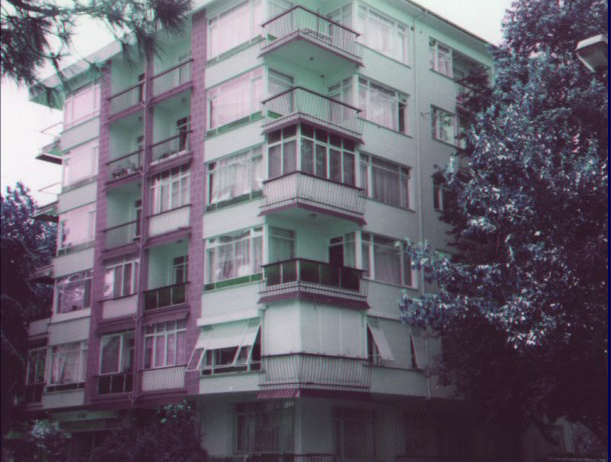
Approximately 80 percent of Turkey’s urban households live in mid-rise apartment blocks constructed of cast-in-situ, reinforced concrete with masonry infill. The vertical structure consists of columns 200-300 mm in thickness, longer in one direction than in the other, and designed to fit within the walls. Floor and roof slabs are of “filler slab” construction, with hollow clay or concrete tiles used to form the voids, and are usually supported by reinforced concrete beams. In some cases the framing is flat-slab construction. The reinforced concrete frame is infilled with hollow-tile or masonry-block walls which are rarely connected structurally to the frame. These buildings have not performed well in recent earthquakes because poor design and construction have resulted in insufficient lateral resistance in the framing system. In many cases, this has been coupled with an inappropriate building form. Notwithstanding the existence of earthquake-resistant design codes for more than 30 years, many buildings have not been designed for an earthquake of a magnitude that could occur within the building’s lifetime.

HTML | PDF

Report # 101 : Tunnel form building

by Ahmet Yakut, Polat Gulkan

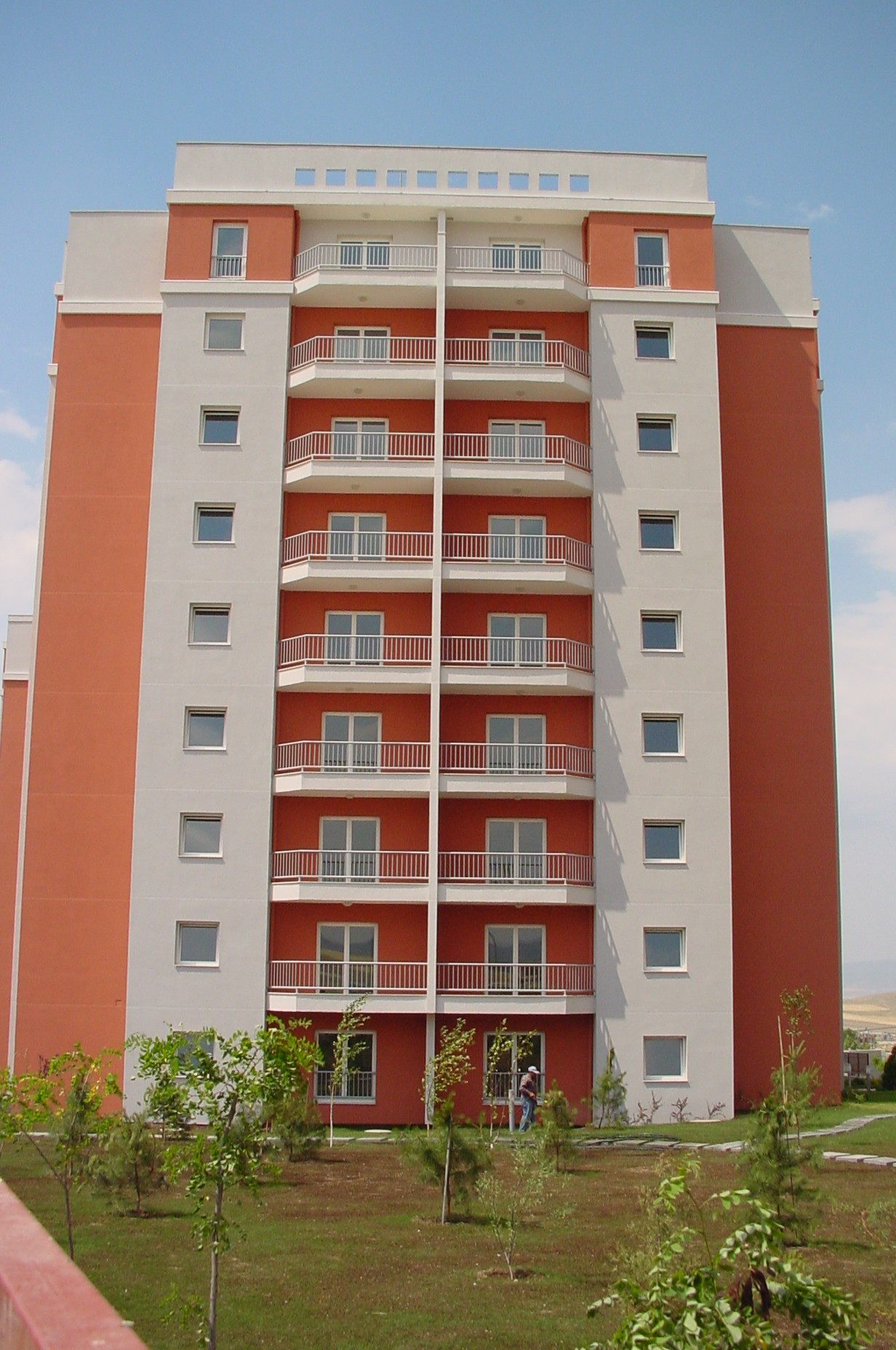
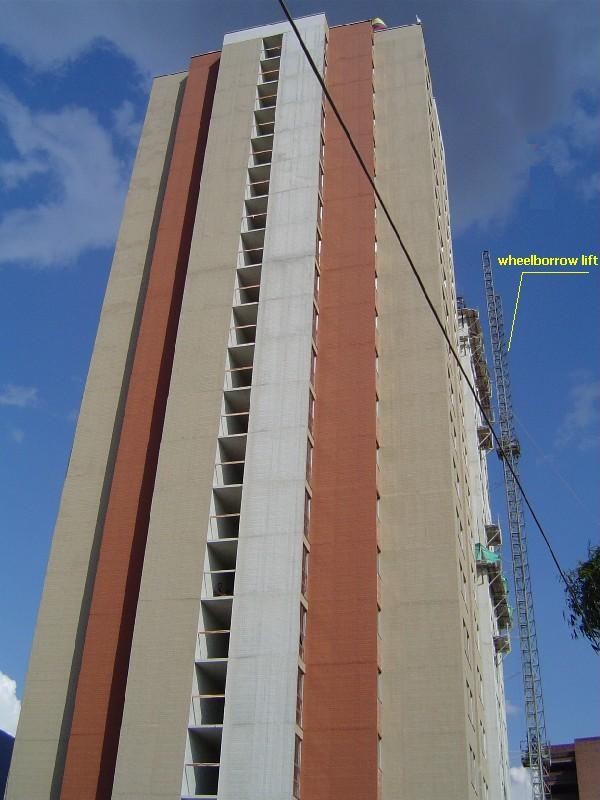
This type of rapidly constructed, multi-unit residential form has been used in Turkey since the late 1970s and early 1980s. It has demonstrated superior earthquake resistance and has also been increasingly utilized as permanent housing in post-earthquake reconstruction programs. Initially, the tunnel form building was targeted for multi-unit residential construction for public or privately sponsored housing projects. Typically, a single building may contain 15 or more stories and up to 40 or 50 residential units. This contribution has been motivated by our intention to not only familiarize readers with the architectural or structural features of the building type, but to also underscore its noteworthy seismic performance that stands in stark contrast to Turkey’s recent experience.

HTML | PDF

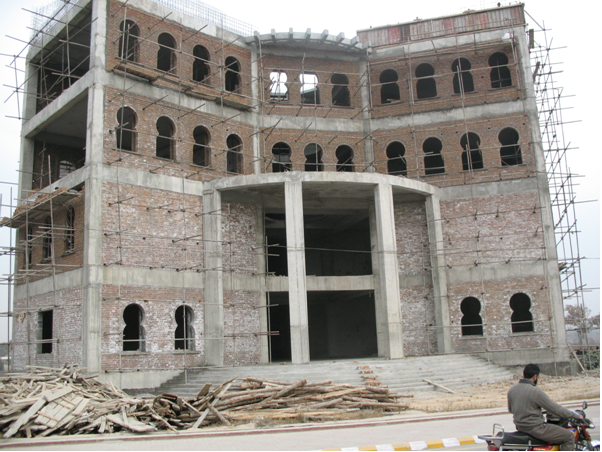
Report # 159 : Reinforced concrete buildings in Pakistan

by Yasir Irfan Badrashi, Qaisar Ali, Mohammad Ashraf

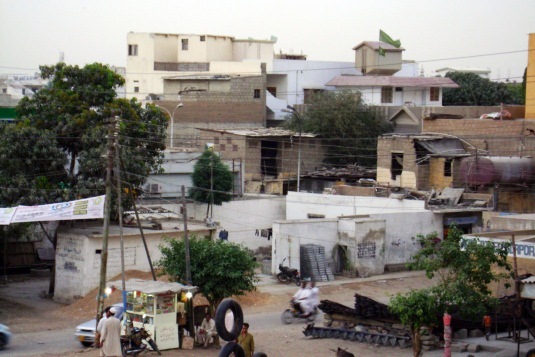
This report addresses reinforced-concrete buildings in Pakistan. Due to the rapid urbanization in Pakistan in the recent past and consequently the scarcity and inflated cost of land in the major cities, builders have been forced to resort to the construction of reinforced-concrete buildings both for commercial and residential purposes. It is estimated that reinforced-concrete buildings constitute 10 to 15% of the total building stock in the major cities of Pakistan and this percentage is on the rise. However, construction of reinforced concrete buildings in Pakistan is still in nascent stage with construction procedures lacking compliance with the established construction procedures. This report is based on survey of the building stock of 5 major cities in Pakistan and hence provides a realistic picture of construction of reinforced-concrete buildings in Pakistan. The statistics provided in this report are based on personal observation of the authors as well as opinion of professionals working in the construction industry who were interviewed in the course of this survey.

HTML | PDF

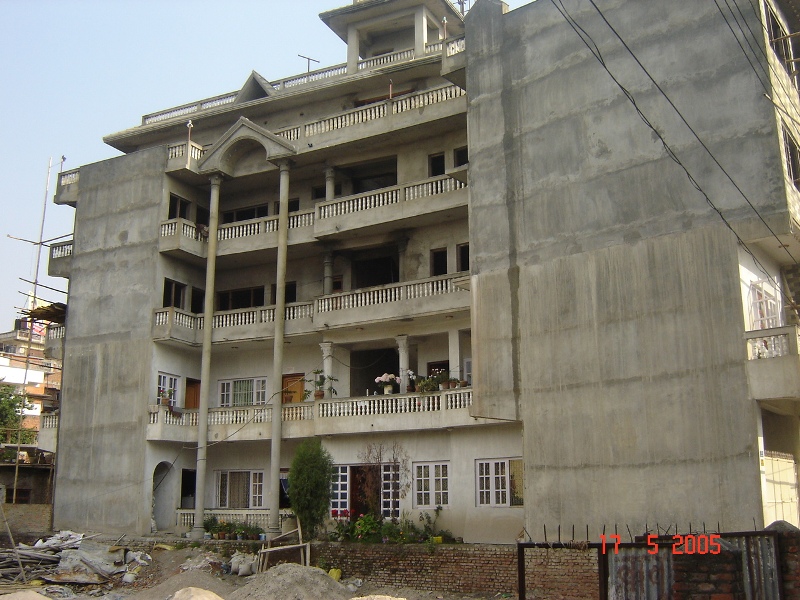
Report # 145 : Pillar walaghar (URM infilled RC frame buildings)

by Yukta Bilas Marhatta, Jitendra K Bothara, Meen Bahadur Magar, Gopal Chapagain

This building type is widely constructed in the urban and semi-urban area of Nepal. It has all the characteristics of a vernacular building only with the exception that few of the construction materials are not local. It is one of the most emerging building typologies in Nepal. This is mostly non-engineered building typology. However, in urban areas sometimes competent structural engineers are also involved in the design. This technology was picked up after its relatively better performance during 1988 Udaypur earthquake which recorded M6.4 on Richter scale, that severely hit eastern Nepal. In this type of building a lightly reinforced frame is constructed first and then infill walls are erected later between columns. Though not usual, sometimes walls are constructed first and columns and beams later. These buildings serve multifunctional purposes such as residential, commercial, official, religious, educational, etc. These buildings are highly vulnerable to earthquake because of deficient detailing, inferior construction materials and the inadequate technology employed. Despite the use of modern materials of construction there is an ever growing risk to life and property due to potential earthquake attack. This building type, if designed and constructed properly, is suitable for low rise buildings up to 3 to 4 stories high. It is necessary to disseminate simple techniques of earthquake resistant measures for these buildings to the grass-root level.

HTML | PDF

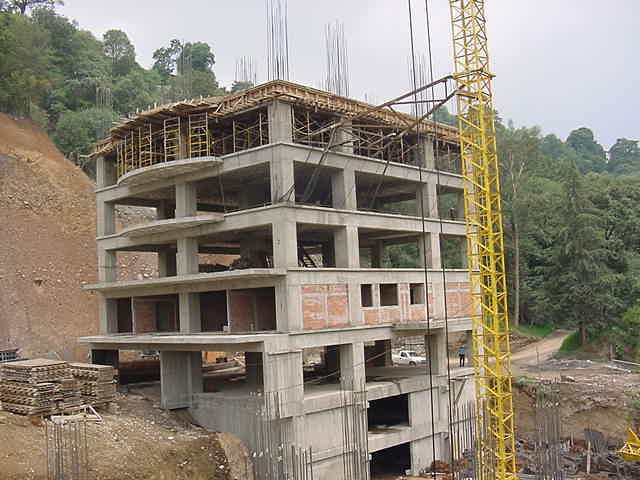
Report # 115 : Reinforced concrete multistory buildings

by Mario Rodriguez, Francisco G. Jarque

This report describes Reinforced Concrete (RC) multistory residential buildings in Mexico. This type of construction is found mostly in large cities where space limitations lead to this type of solution. Typically buildings of this type have eight or more stories. Members of the middle and upper classes are the target market for this type of construction. In areas of low seismic risk, waffle slab floor systems without structural RC walls are preferred by developers primarily due to their speed of construction. In areas of medium to high seismic risk, it is typical for this type of building to have a dual system, which combines RC moment frames and RC structural walls as the main lateral load resisting elements. The RC floor systems are constructed of waffle slabs or solid slabs. RC buildings account for about 80% of the entire housing stock in Mexico. Buildings constructed after 1985 are expected to perform well under seismic forces, especially in Mexico City, where the building construction code has been substantially updated to incorporate lessons learned during the 1985 earthquake.

HTML | PDF

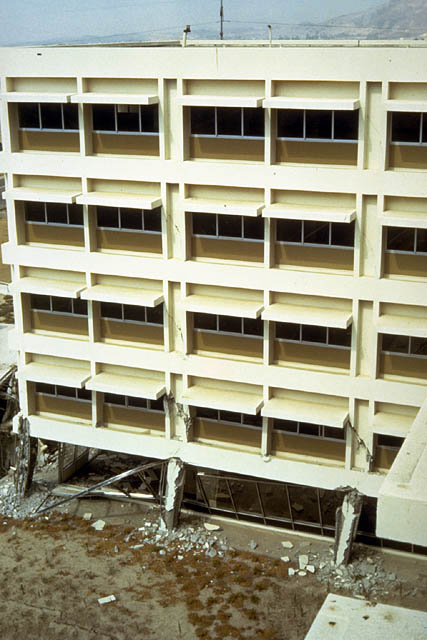
Report # 111 : Reinforced Concrete Moment Frame Building without Seismic Details

by Heidi Faison, Craig D. Comartin, Kenneth Elwood

This report examines reinforced concrete buildings that use moment-resisting frames without ductile detailing to resist seismic loads. While this building type is predominantly used for office buildings and hotels, it is also used in urban areas for multi-family dwellings (condominiums) and university dormitories. It can be found in most urban areas across the country, though it is of particular concern in areas of high seismic hazard like California, Alaska, Washington, and Oregon. Building codes did not include requirements for special seismic detailing of reinforced concrete structures until the 1970′s when several earthquakes demonstrated the need for more ductile design. These buildings are vulnerable to numerous failure modes including: failure of column lap splices; strong beam/weak column failures; captive column failure; punching shear failures in flat plate slabs; and shear and axial load failure of columns with wide transverse reinforcement spacing. A discontinuity in stiffness and strength at the bottom story, due to a soft story, often results in a concentration of earthquake damage at the building base. Several examples of past earthquake behavior are given in this report as well as discussion of various retrofit options.

HTML | PDF

Report # 109 : Concrete Shear Wall Buildings

by Luis G. Mejia, Juan C. Ortiz R., Laura I. Osorio G.

These buildings are characterized mainly by cast-in-place, load-bearing, reinforced-concrete shear walls in both principal directions. The buildings are usually multiple housing units found in the major urban areas of Colombia, especially in the Andean and Caribbean regions. They represent about 2 to 3% of the housing stock in the cities with a population between one to seven million. These buildings typically have 7 to 20 stories, generally with a cast-in-place reinforced-concrete floor slab system. In general, these buildings have good seismic performance because of their regular mass distribution in height and symmetrical plan configuration and the great stiffness and strength of the walls that can restrict story drift to less than or equal to 0.005h. In some cases, if the buildings were constructed after the first Colombian Seismic Code in 1984, poor seismic detailing is found.

HTML | PDF

Report # 103 : Single-family reinforced concrete frame houses

by Mohammed Farsi, Farah Lazzali

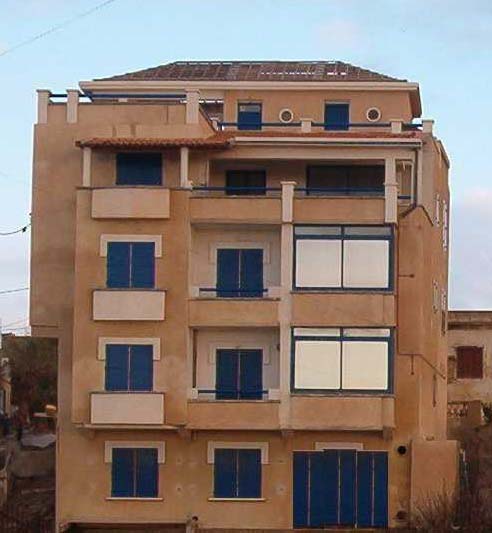
This privately owned housing constitutes about 60 to 70% of the housing stock and is widespread throughout northern Algeria, the region of the country’s highest seismic risk. Generally, these buildings are from 1 to 3 stories high. The ground floor is used for parking or for commercial purposes. The structural system consists of reinforced concrete frames with masonry infill walls made out of hollow brick tiles. The infill walls are usually provided in the residential part of the building (upper floors). Due to the limited amount of infill walls at the ground floor level, these buildings are characterized by soft-story behavior during earthquakes. These buildings have most often been built after the development of the 1981 Algerian seismic code. However, the seismic code is not enforced in private construction and most of the buildings have been built without seismic strengthening provisions and historically have been severely affected in Algerian earthquakes, including the May 21, 2003 Boumerdes earthquake. This report does not describe reinforced concrete frame buildings financed by public or private property developers and built according to the seismic code.

HTML | PDF

Report # 97 : Medium/high rise moment resisting reinforced concrete frame building

by Maria D. Bostenaru

Such buildings generally range from 10 to 17 storeys in height with the ground floor being used for commercial purposes, whilst the upper floors house residential units. The vertical load bearing structure consists of moment-resisting reinforced-concrete frames which also generally serve as the lateral load-resisting system. However, when larger spans are encountered, reinforced-concrete structural walls are included to provide a dual structural system. Masonry infills built from lightweight concrete masonry units provide architectural space delineation. The seismic performance of such buildings constructed prior to 1977 varies from no damage to complete collapse. To date damage has usually been attributable to conceptual and construction mistakes.

HTML | PDF

Report # 96 : Early RC frame condominium building with masonry infill walls designed for gravity loads only

by Maria D. Bostenaru

This urban housing construction was practiced in Romania from 1907-1945, but predominantly in the 1930s, in the capital city of Bucharest. These buildings are mid- or high-rise (5-10 upper floors), often with two basements. Although there are several functional variations according to the usage and combination of flats, offices, and shops, this report discusses exclusive housing use. The number of housing units is variable. While smaller mid-rise buildings may contain one large luxury unit on each floor, taller buildings may include as many as eight small one-room flats, sometimes without a kitchen. The shape of the plan, containing L, U, H, or forms that cannot be described geometrically, and the elevation of the building are highly irregular. Upper floors may have recesses in the facade and may have corner towers. The load-bearing structure is RC skeleton designed for gravitational loads only. Columns are unevenly distributed so that beams at least one end are supported as secondary beams. Some beams are supported by columns with inadequate reinforcement or reduced sections of the RC members impede the formation of moment-resisting frames. The facade walls have solid clay brick masonry infill and improve the seismic behavior. The beneficial effect of masonry infill is influenced by the wall thickness, the size/position of openings in walls and the position of the partition wall to the frame. Staircases and elevators weaken the structure by introducing concentrated holes in flexible, thin RC slabs. Bucharest is located on alluvial soil deposits on river banks. Sandy ground or high levels of underground water have often presented problems for the foundation of buildings. Damaging earthquakes (M>7.0), centered in Vrancea, recur three times every century. These buildings were affected by the 1940 and 1977 earthquakes, but performed well relative to their high vulnerability. Out of the 61 buildings heavily damaged in the 1977 earthquake, 28 were of this type but were high-rise (7-9 floors).

HTML | PDF